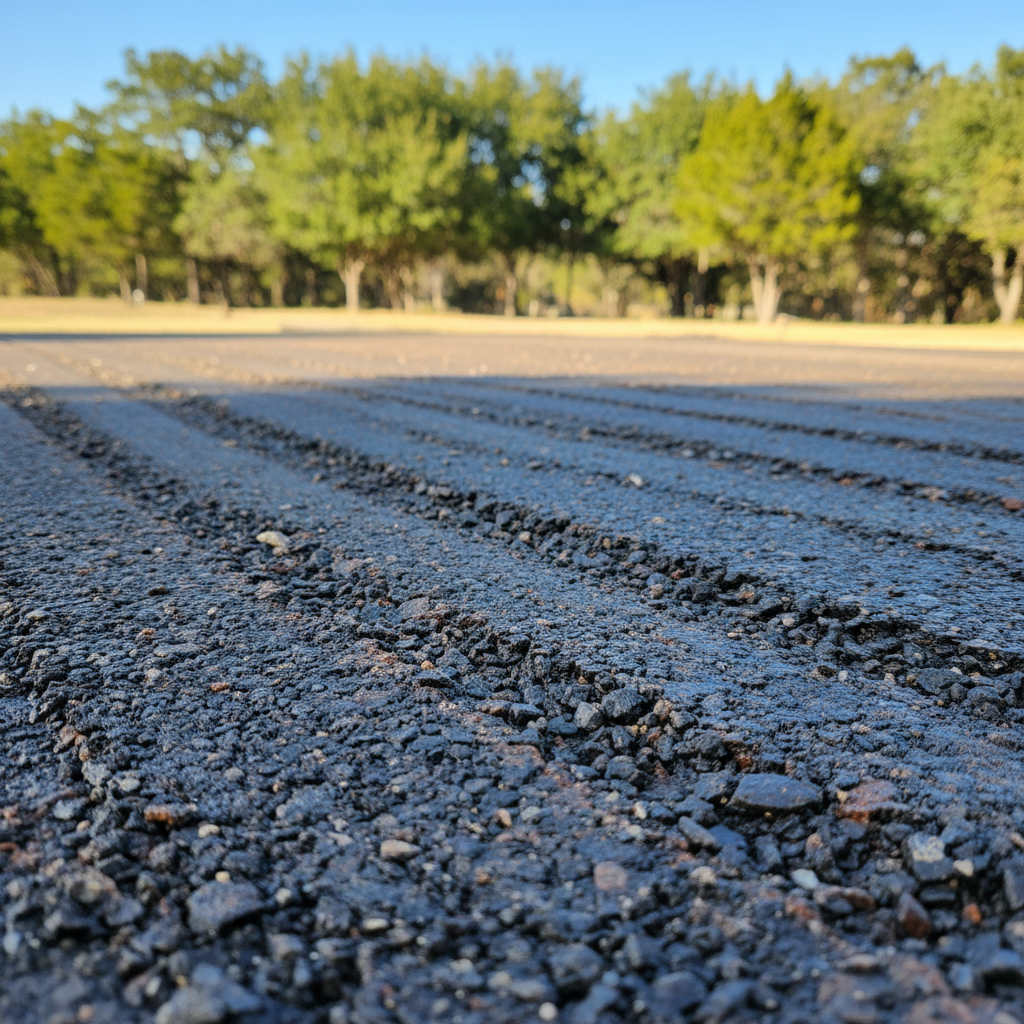
Alright, let's talk about asphalt milling. If you've got an old, beat-up asphalt driveway or private road here in Marble Falls, you might've heard this term thrown around. It's not just for big highways, you know. Homeowners can benefit from it too, especially if you're looking to refresh your pavement without tearing everything out and starting from scratch. But what exactly is it, and what do you need to know before, during, and after the job?
What is Asphalt Milling, Anyway?
Simply put, milling is like shaving off the top layer of your existing asphalt. We use a specialized machine with a big rotating drum that has a bunch of cutting teeth. It grinds up that old, worn-out surface, leaving behind a fresh, textured base. This base is then ready for a new layer of asphalt, or sometimes, if the base is good enough and the traffic is light, it can even serve as a temporary surface on its own.
Why do it? Well, it's often more cost-effective than a full tear-out and replace. It also helps maintain existing grades and drainage, which is a big deal around here with our occasional heavy rains. Plus, you're recycling the old asphalt, which is good for the environment.
Before the Milling Crew Shows Up
This is where your homework comes in. You've got to assess your situation. Is your driveway just showing surface cracks and minor potholes, or is it completely falling apart with alligator cracking everywhere? Milling is best for surfaces that have structural integrity underneath but need a new wearing course. If your base is shot, milling might just be a temporary fix for a bigger problem.
You'll also want to mark out anything important. Sprinkler heads, buried dog fences, landscape lighting — anything that's close to the edge of your asphalt or might be slightly covered by it. Our milling machines are powerful, and they don't discriminate. Don't assume we'll see that little sprinkler head. Mark it clearly with brightly colored spray paint or flags. Trust me, it saves everyone a headache later.
Consider your drainage too. If your driveway always puddles in the same spot after a downpour, milling gives us a chance to slightly adjust the grade before the new asphalt goes down. Talk to your contractor about this upfront. It's easier to fix before the work starts.
During the Milling Process: What to Expect
Milling is a noisy, dusty process, no two ways about it. The machines are big, and they make a racket. There will be asphalt dust in the air, so if you have sensitive plants or outdoor furniture nearby, you might want to cover them up. We do our best to control it, but it's part of the job.
You'll see the old asphalt being ground up into what we call 'millings' or 'RAP' (recycled asphalt pavement). These millings are often hauled away, but sometimes, if you're just doing a small area and don't mind the look, they can be spread and compacted on site for a temporary, gravel-like surface. This is something you'd discuss with us at Marble Falls Asphalt Solutions beforehand.
Can you do any of this yourself? Not the actual milling, no. Those machines are specialized, expensive, and require trained operators. This isn't a DIY job. What you can do is make sure the area is clear, mark your utilities, and keep pets and kids away from the work zone. Safety first, always.
After the Milling is Done
Once the milling is complete, you'll have a rough, textured surface. It's not pretty, but it's a solid base. If you're immediately paving over it, great. If there's a delay, or if you're using the millings as a temporary surface, you'll want to compact them. A vibratory plate compactor or a roller will do the trick. For a small area, you might be able to rent a plate compactor and do this yourself. It's good exercise, and it helps lock those millings in place.
If you're planning to pave, the milled surface needs to be clean and free of loose debris before the new asphalt goes down. We'll usually sweep or blow it off. Then, we apply a tack coat – a sticky liquid asphalt emulsion – to help the new layer bond to the old. Don't skip this step; it's crucial for longevity.
The biggest thing after milling is to get that new asphalt down relatively quickly, especially if it's a primary access point. The milled surface, while stable, isn't designed for long-term heavy traffic or exposure to our Central Texas sun and sudden downpours. It's a foundation, not the finished product.
So, there you have it. Milling is a smart way to get a fresh start on your asphalt without breaking the bank. Just make sure you understand the process, prepare your property, and know when to let the pros handle the heavy lifting. If you've got questions about your specific driveway here in Marble Falls, give us a shout. We're happy to take a look.