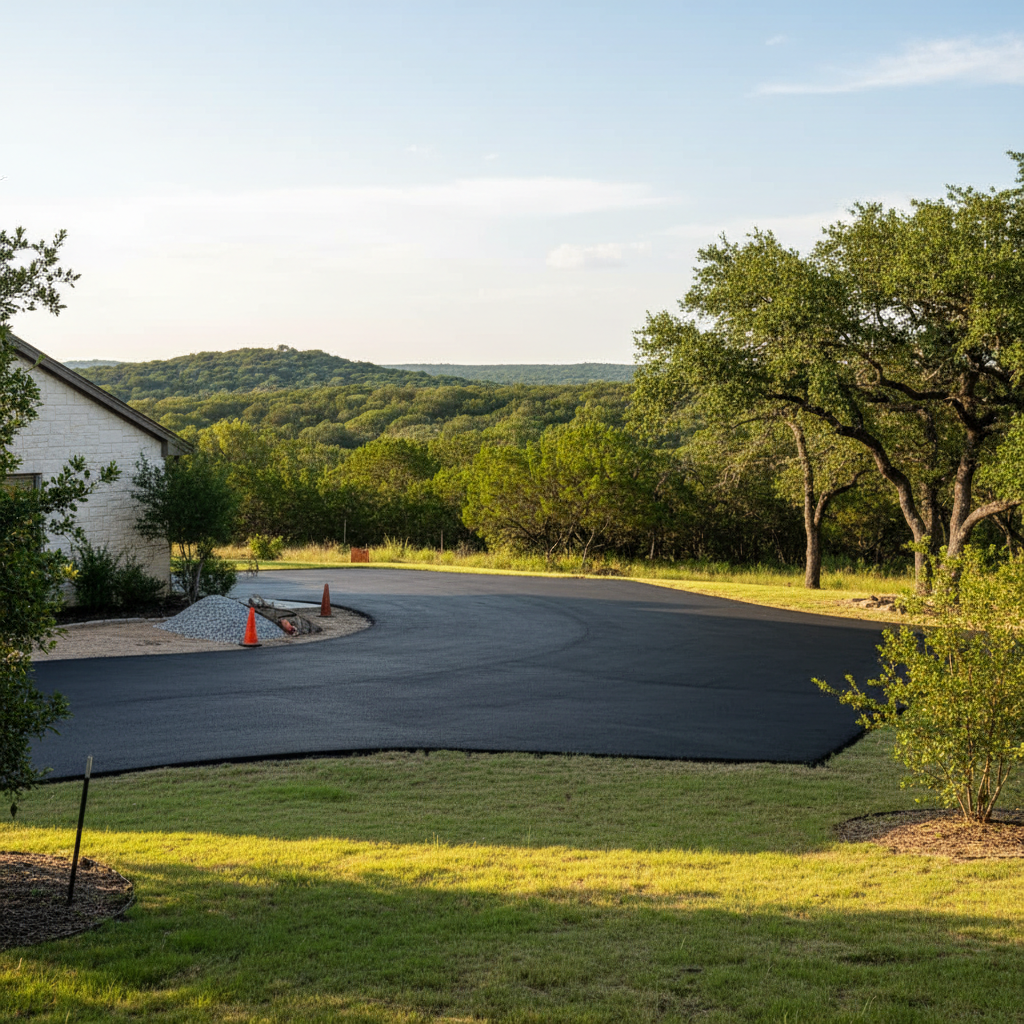
Alright, let's talk about your commercial asphalt here in Marble Falls. It's a big investment for any business, and you want it to last. But our Texas weather, especially in the Hill Country, isn't always kind to pavement. I've seen firsthand what happens when folks don't consider the local climate when planning their asphalt work or maintenance. It's not just about getting it done; it's about getting it done right, at the right time, and then protecting it.
Understanding Our Marble Falls Climate and Your Asphalt
You know how our summers hit? Brutal. Triple-digit days aren't uncommon, and that intense heat is a real stressor on asphalt. It makes the material more pliable, almost like thick syrup, which means it's more susceptible to rutting under heavy loads. Then you've got the sudden, heavy downpours we get, sometimes after long dry spells. That rapid temperature change and water intrusion can wreak havoc.
We also have some pretty expansive clay soils around here, especially if you're out towards the lake or in some of the older parts of town. That soil movement, expanding when wet and contracting when dry, can put a lot of pressure on your sub-base and, consequently, your asphalt. If your sub-base isn't properly prepared, you'll see cracks and dips showing up faster than you'd like.
When to Schedule Asphalt Work: Timing is Everything
So, when's the best time to get new paving laid down or major repairs done? Generally, you want moderate temperatures. Think spring and fall. The ideal range for asphalt installation is usually between 50 and 85 degrees Fahrenheit. Why? Because the asphalt mix needs to cool and compact properly. If it's too hot, it takes too long to set, and you risk issues with compaction and early damage. If it's too cold, it cools too fast, making it hard to work with and properly compact, leading to a weaker surface.
For smaller repairs like patching potholes or crack filling, you've got a bit more flexibility. But even then, you don't want to be doing it in the dead of winter when temperatures are consistently below freezing, or in the peak of summer when the ground is scorching. The materials just won't bond as well.
Weather Conditions That Affect the Job
Beyond just temperature, there are a few other weather factors we always keep an eye on:
- Rain: You can't pave on a wet sub-base. Period. Water trapped beneath the asphalt will cause it to fail prematurely. So, if there's rain in the forecast, we're rescheduling. It's not worth cutting corners.
- Humidity: High humidity can affect how quickly asphalt cools and cures. It's not as critical as rain or extreme temperatures, but it's part of the overall picture.
- Wind: Strong winds can cool the asphalt mix too quickly, especially during paving. It also makes applying sealcoat a challenge, as it can dry too fast or blow debris onto the fresh surface.
That's why when you call Marble Falls Asphalt Solutions, we're not just looking at the calendar; we're looking at the forecast for the whole week. We want to make sure the conditions are perfect for a long-lasting job.
Protecting Your Investment Year-Round
Once you've got that beautiful, smooth asphalt, you gotta protect it. It's not a set-it-and-forget-it deal, especially with our climate.
First off, sealcoating is your best friend. Think of it like sunscreen for your driveway or parking lot. It protects the asphalt from UV rays, water penetration, and oxidation. I recommend sealcoating every 2-3 years for commercial properties, depending on traffic and how much sun it gets. It's a small investment that pays off big time in extending the life of your pavement.
Next, stay on top of crack filling. Even small cracks can let water seep down into the sub-base. Once water gets under there and freezes (which can happen here, even if it's brief) or just sits there softening the base, you're looking at potholes and bigger problems. Fill those cracks as soon as you see them. It's a simple, cost-effective repair.
Also, keep an eye on your drainage. Make sure water is flowing off your asphalt and away from the edges. Puddles that sit for extended periods are bad news. They soften the surface and can lead to deterioration. If you've got areas where water consistently pools, that's something to address.
Finally, keep it clean. Debris, oil spills, and chemicals can all break down your asphalt over time. A regular sweep and quick cleanup of any spills will go a long way.
Look, your commercial property's asphalt is often the first impression customers get. Keeping it in good shape isn't just about aesthetics; it's about safety, functionality, and protecting your business's image. Don't wait until you've got major issues. A little proactive maintenance goes a long way in our Marble Falls climate.