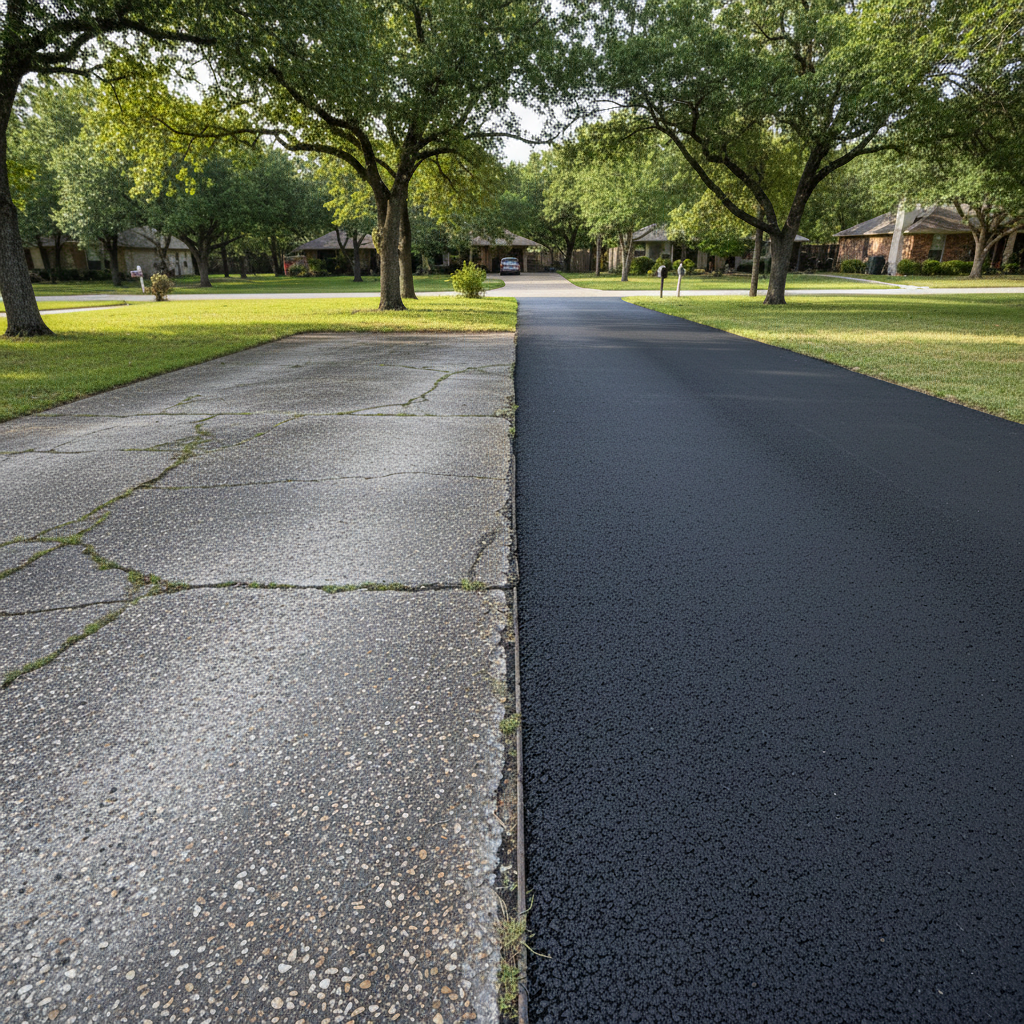
Got a driveway that's seen better days? You're probably wondering how best to fix it. For homeowners in Marble Falls, especially with our wild weather and sometimes tricky soil, it usually comes down to two main choices for asphalt: an overlay or a full tear-out and replacement. I've been doing this a long time, and I've seen both approaches done right and, well, done wrong. Let's talk about what you really need to know.
Asphalt Overlay: The Quick Fix (Sometimes)
An asphalt overlay, which some folks call 'resurfacing,' is basically putting a new layer of asphalt right over your existing, damaged driveway. Think of it like a fresh coat of paint, but for your pavement. We'll clean the old surface up, fill any major cracks or potholes, and then lay down a new layer, usually 1.5 to 2 inches thick, of hot asphalt mix.
The Good Stuff About Overlays:
- Cost: This is usually the big one. An overlay almost always costs less than a full replacement. You're saving money on demolition, hauling away old material, and less labor overall.
- Speed: It's a faster process. We aren't tearing up your yard or making a huge mess for days. You'll get your driveway back in action quicker.
- Less Disruptive: Less noise, less dust, less heavy equipment hanging around your property.
Where Overlays Fall Short:
- Depends on the Base: Here's the kicker. An overlay is only as good as what's underneath it. If your existing asphalt has deep structural issues – like severe alligator cracking, widespread potholes that go all the way through, or major drainage problems causing dips and humps – an overlay is just putting a band-aid on a broken bone. Those underlying problems will eventually show through the new layer.
- Limited Lifespan: While it'll look great initially, an overlay generally won't last as long as a properly installed full replacement. You're typically looking at 7-15 years, depending on traffic and how good the original base was.
- Elevation Changes: Adding a new layer means your driveway will be higher. This can create issues with garage door clearances, drainage, and how it transitions to sidewalks or landscaping. We have to be careful about this, especially with some of the older homes around Lake Marble Falls where grades are already tight.
Full Tear-Out and Replacement: The Gold Standard
This is exactly what it sounds like. We completely remove your old driveway, haul it away, prepare the subgrade (that's the dirt underneath), compact a new aggregate base layer, and then install brand new asphalt, typically in two lifts (a binder course and a surface course) for a total thickness of 3-5 inches for residential driveways.
Why You'd Go This Route:
- Durability and Longevity: This is by far the most durable option. When done right, with a solid base and proper drainage, a new asphalt driveway can last 20-30 years, sometimes even longer. You're building from the ground up, after all.
- Addresses Root Problems: If you've got serious drainage issues, a crumbling base, or significant heaving from our expansive clay soils, a full replacement lets us fix those problems properly. We can re-grade, improve drainage, and install a strong base that can handle the conditions.
- Better Appearance: You get a perfectly smooth, consistent surface. No ghosting of old cracks showing through.
- Increased Property Value: A brand new, well-built driveway definitely adds curb appeal and value to your home.
The Downsides of Full Replacement:
- Cost: It's more expensive, plain and simple. More labor, more materials, more equipment time.
- Time and Disruption: It takes longer, and it's a bigger project. There will be more noise, more dust, and your driveway will be unusable for a longer period.
- Environmental Impact: More material needs to be removed and disposed of, though we do try to recycle asphalt whenever possible.
So, Which One Should You Pick?
Here's my honest advice. If your driveway has minor surface cracks, a few small potholes, and the overall structure feels solid with no major dips or humps, an overlay might be a perfectly good, cost-effective solution for you. It'll give you a fresh look and several more years of service without breaking the bank.
However, if your driveway looks like a spiderweb of cracks, has significant potholes that go deep, feels spongy in spots, or you've got standing water issues after a rain, don't even think about an overlay. You'll just be wasting your money. Those are signs of a failing base, and the only real fix is a full tear-out and replacement. It's an investment, sure, but it's one that will pay off in the long run with a driveway that lasts and performs as it should.
Before you decide, get a professional assessment. Marble Falls Asphalt Solutions can come out, take a look at your driveway, and give you an honest opinion on what's going on underneath. We'll explain your options clearly so you can make the best decision for your home and your wallet. Don't guess; let's figure it out together.